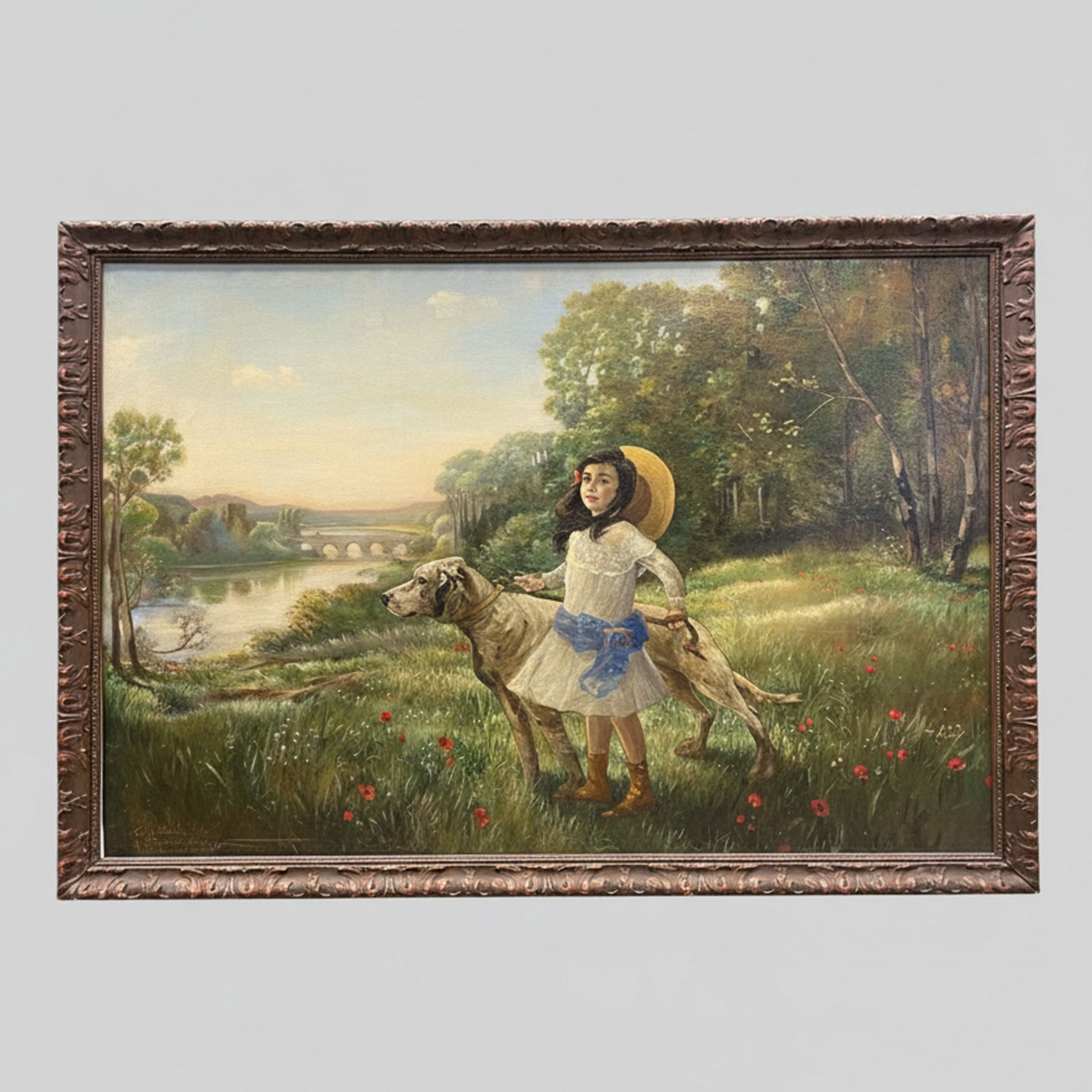

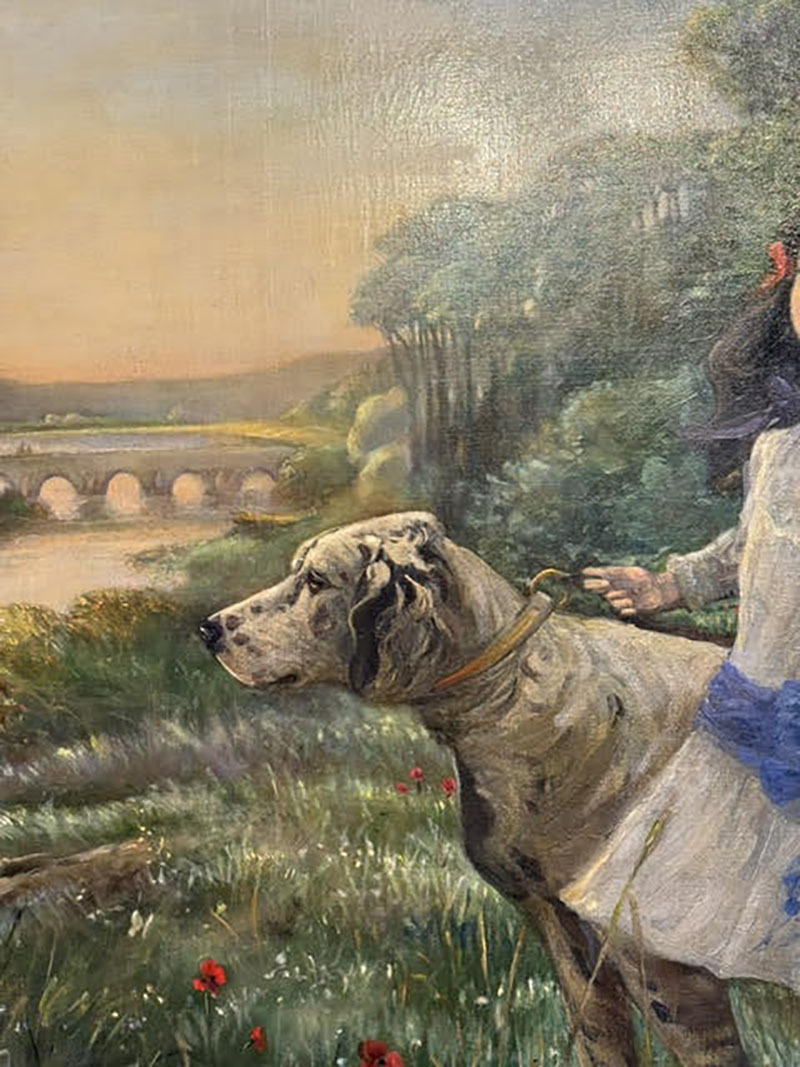
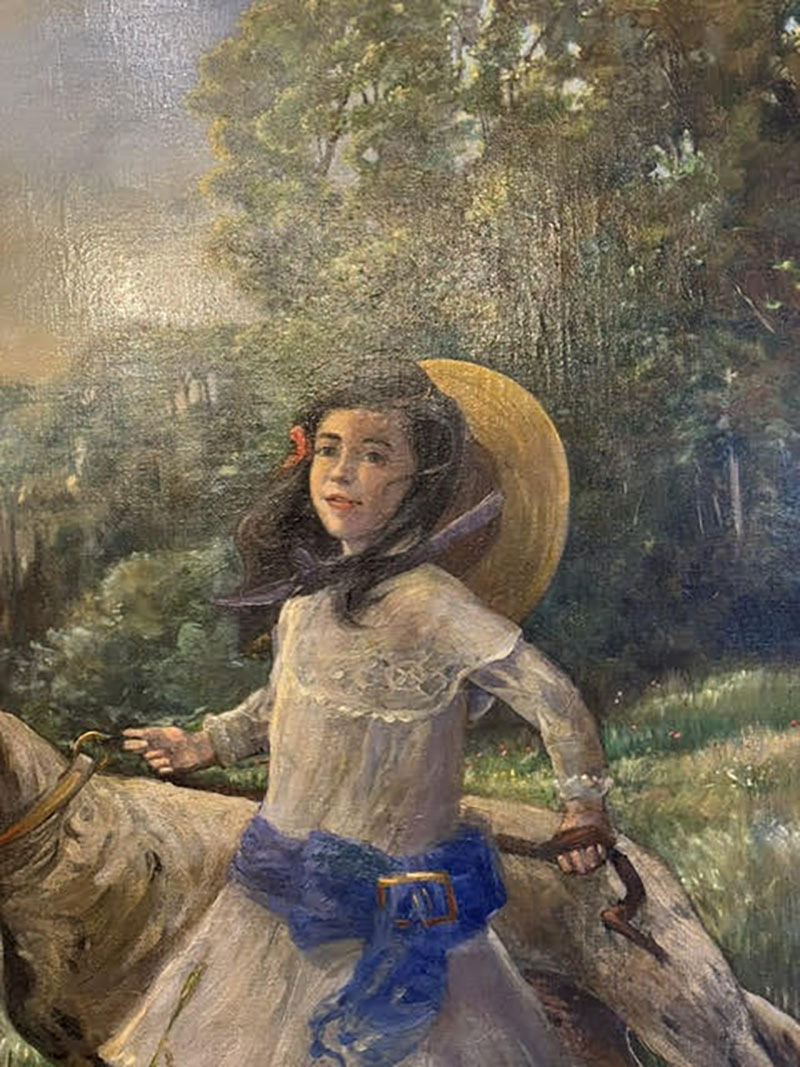
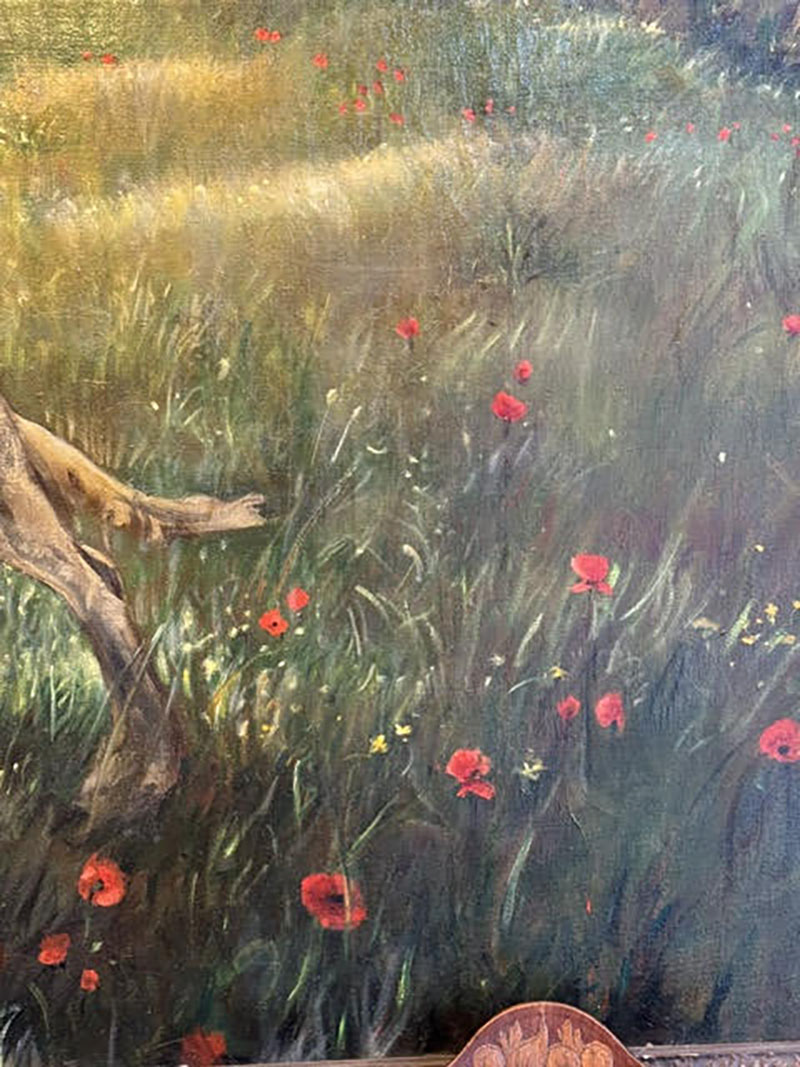
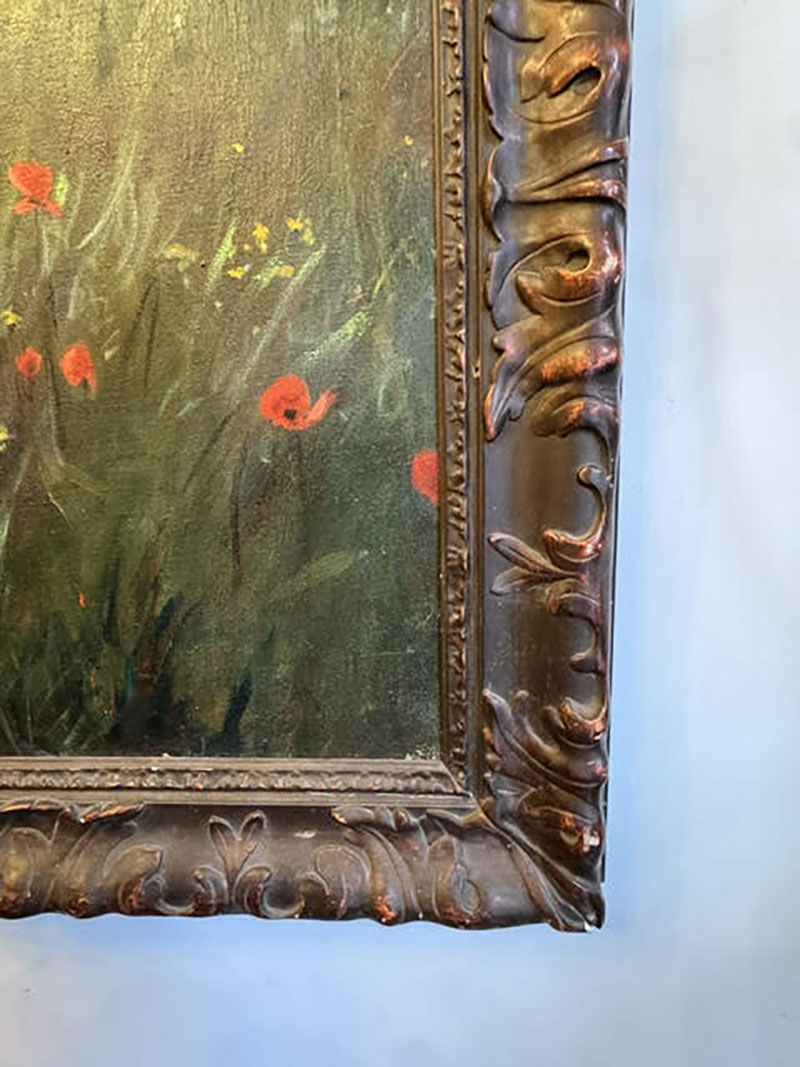
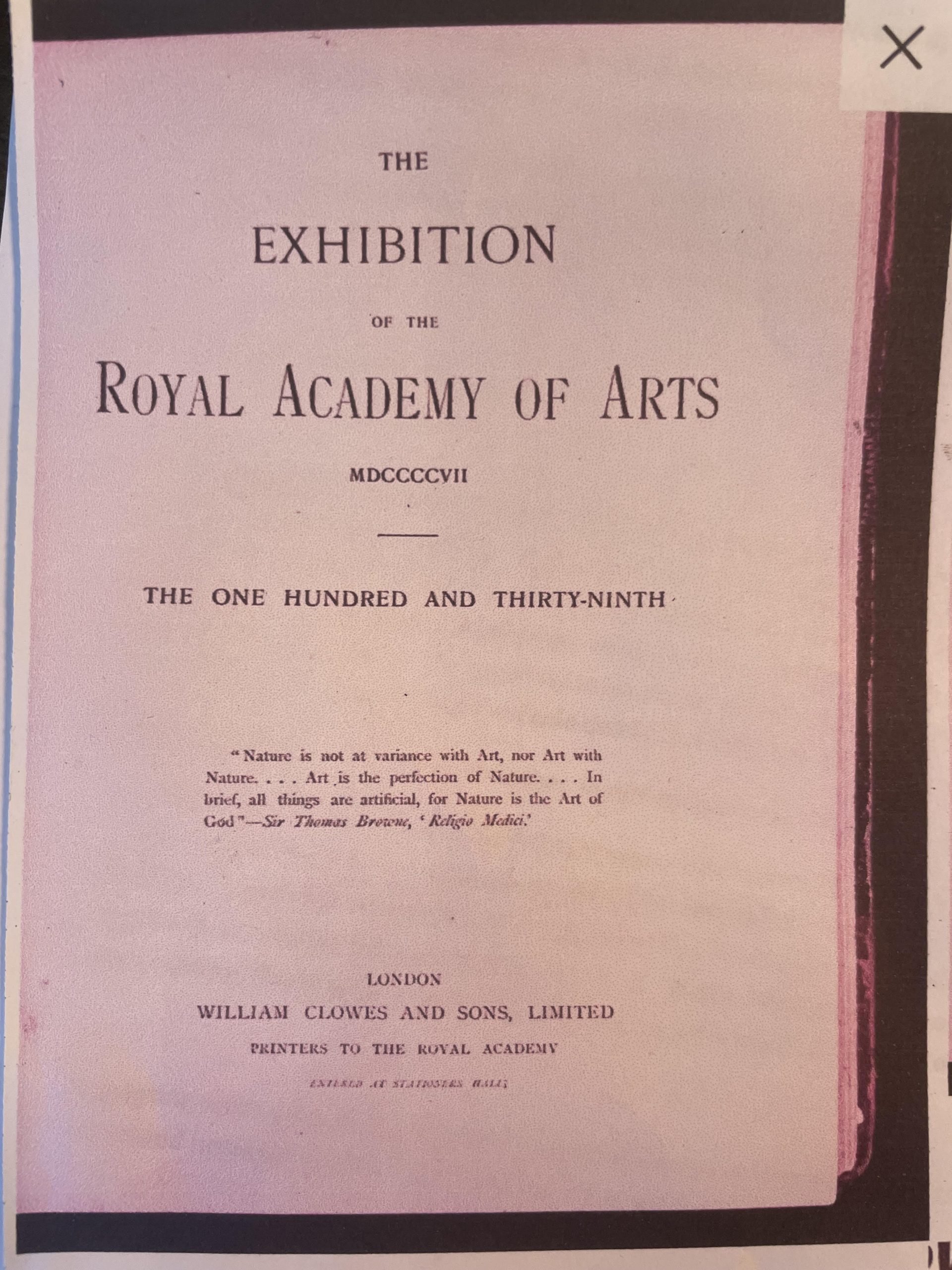









This painting is an impressive work by the British artist William Brock. It is very likely the major work that Brock presented at the Royal Academy of Arts in London in 1907.
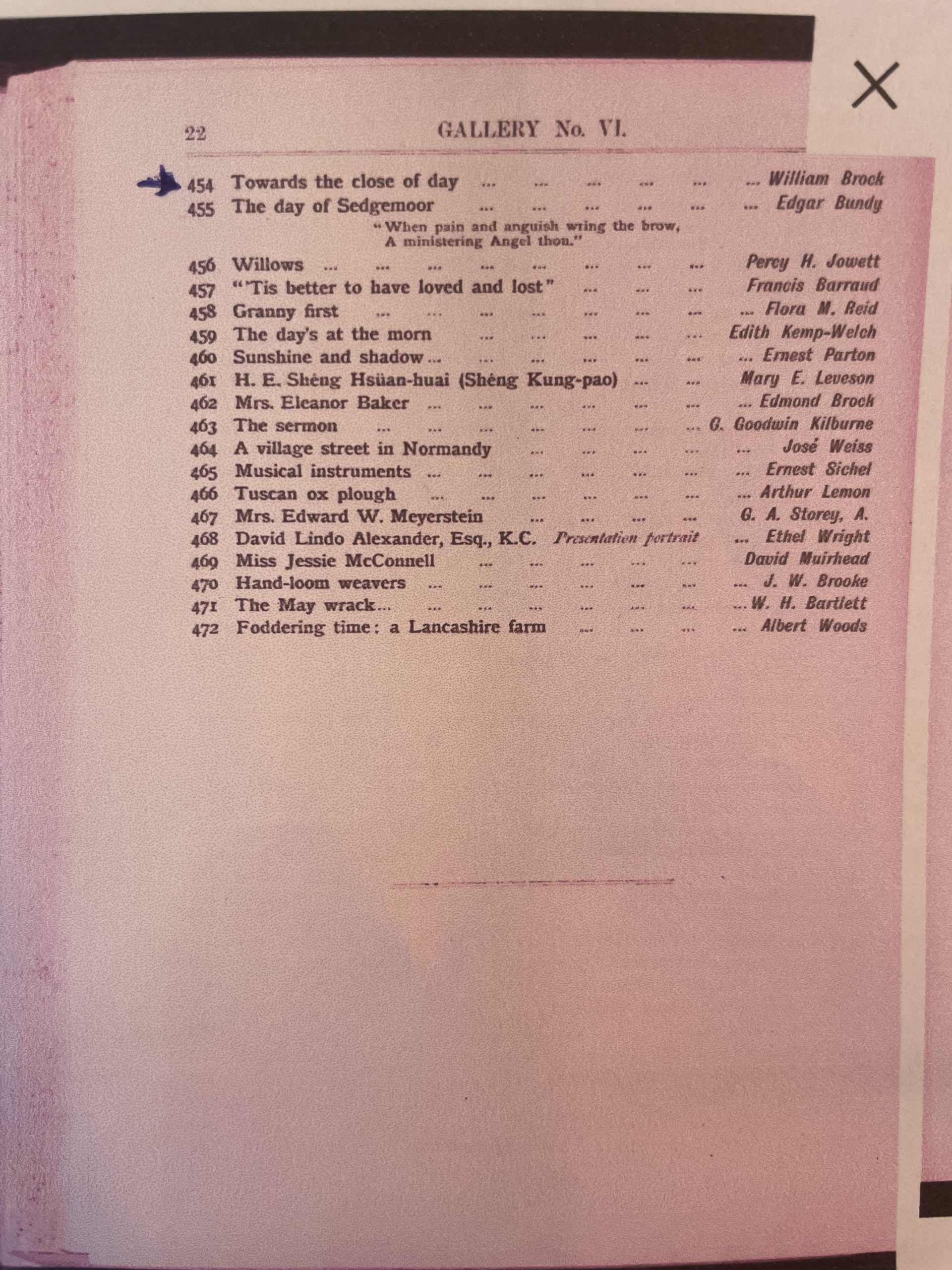
In the official catalogue of the Royal Academy exhibition of 1907 (the 139th exhibition), William Brock is listed with work no. 454 entitled Towards the Close of Day. The title perfectly corresponds to the twilight atmosphere and the golden light that bathes the scene.
At the time, Brock resided at “Studio, 30 Osnaburgh Street, Regent’s Park”, London. The fact that this painting was exhibited at the Royal Academy is a major selling point, as it was the most prestigious showcase for a British artist at the time.
The artist: William Brock
William Brock was a respected painter of landscapes and animals. He was the son of the celebrated sculptor Thomas Brock, the official sculptor to Queen Victoria (notably known for the Victoria Memorial in front of Buckingham Palace).
Training: He studied at the Royal Academy in London and at the École des Beaux-Arts de Paris.
Style: His style combines British academic painting with French Impressionism, clearly visible here in the treatment of the “golden” light and vegetation.
Context: In 1907 (the year this painting was produced), Brock had begun exhibiting regularly at the Royal Academy.
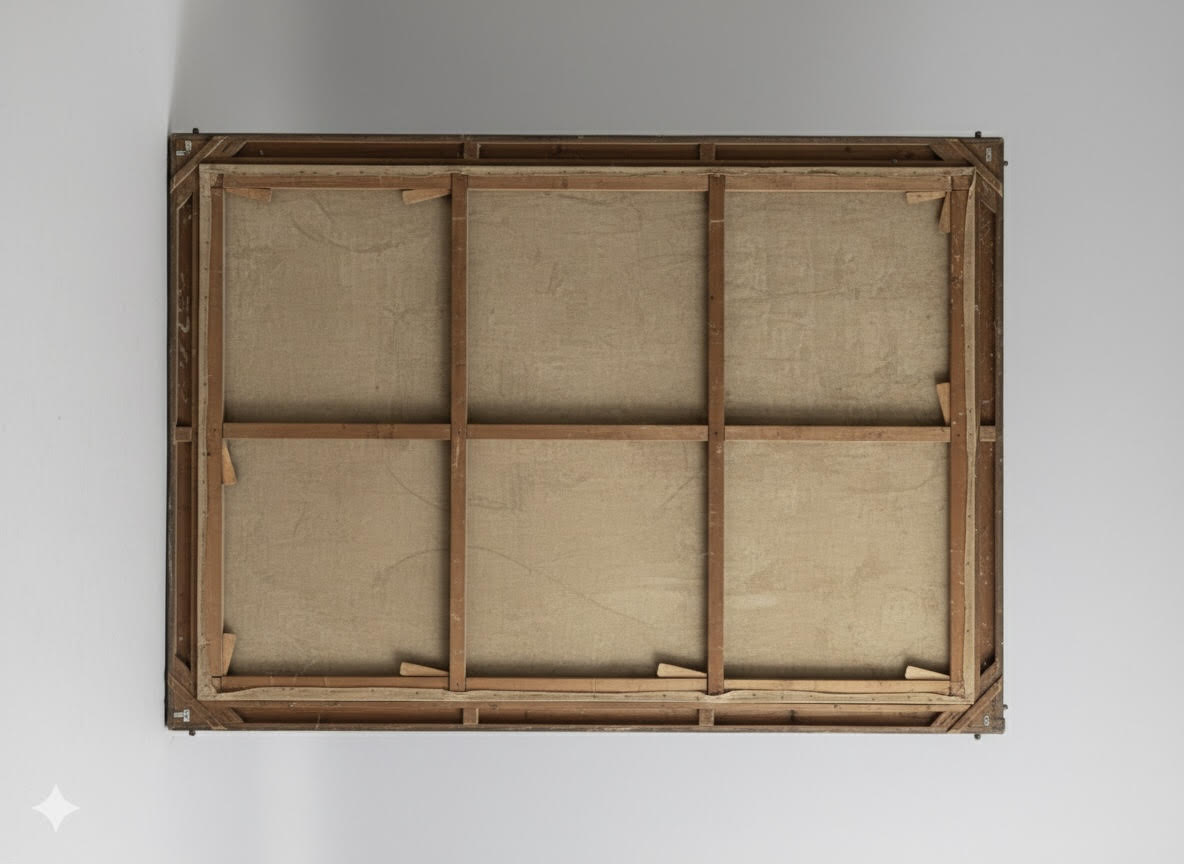
Given its monumental size (260 cm × 180 cm), it is highly likely that this work was conceived for exhibition (either at the Paris Salon or the Royal Academy), placing it among the most ambitious works of his career.
The subject and inscription
The scene:
The painting depicts a young girl accompanied by a large dog (probably a Great Dane or a greyhound) in front of a riverside landscape. The multi-arched bridge visible in the distance evokes the banks of the Seine or the Loire.
Brock painted extensively in Normandy and in France. The landscape, with its stone bridge of several arches and the ruins on the left, strongly recalls Moret-sur-Loing, a town beloved by Impressionist painters such as Alfred Sisley, or another medieval town along the Seine in Normandy.
Brock spent considerable time painting in France after his studies at the École des Beaux-Arts, and works from this period are among the most sought-after.
The inscription:
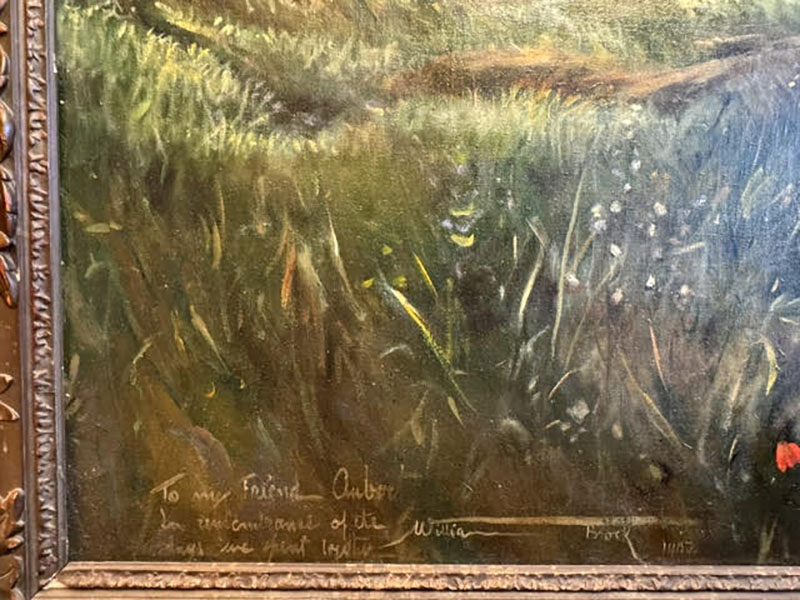
“To my friend Amber, in memory of the days we spent together.”
At that time, Amber Reeves (1887–1981) was a well-known intellectual and writer within London’s artistic circles. Although there is no formal proof, the dates and social connections are consistent.
In 1907, Amber Reeves was a brilliant 20-year-old woman from an influential family closely connected to artistic and intellectual circles. She is notably known for her relationship with H. G. Wells.
Although she was slightly older than the young girl depicted in the painting, the work may represent either a “souvenir portrait” or a personal dedication to a close friend.