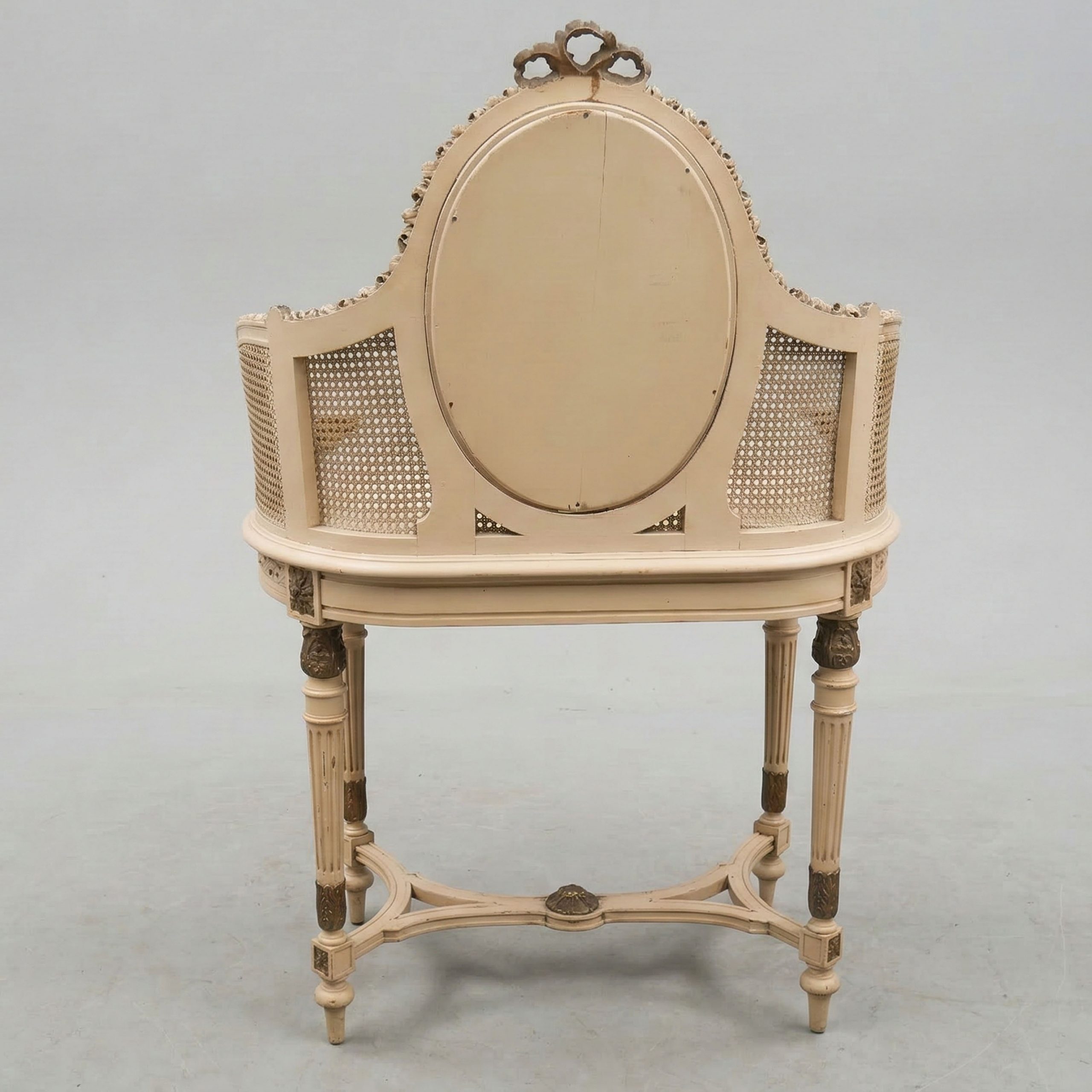
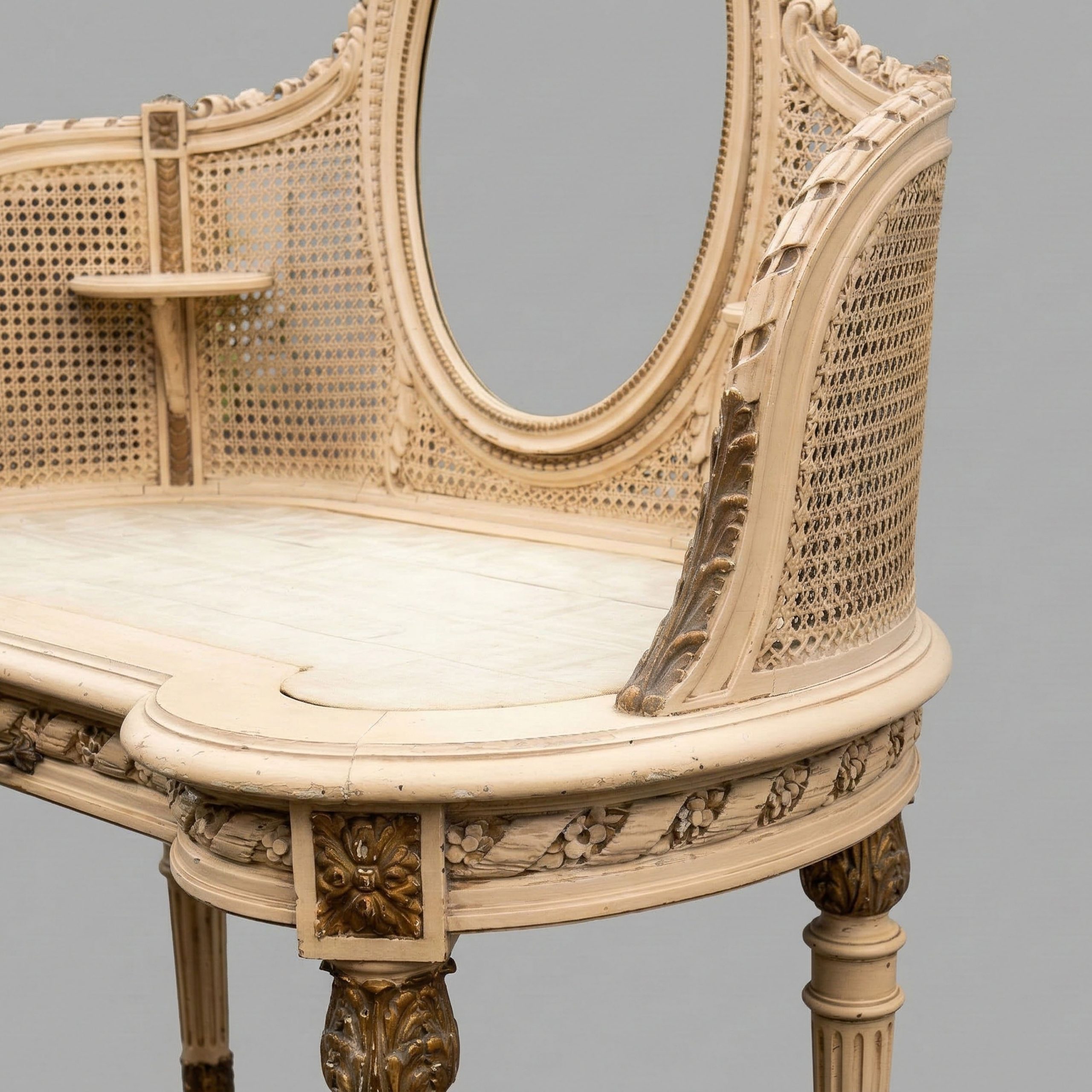
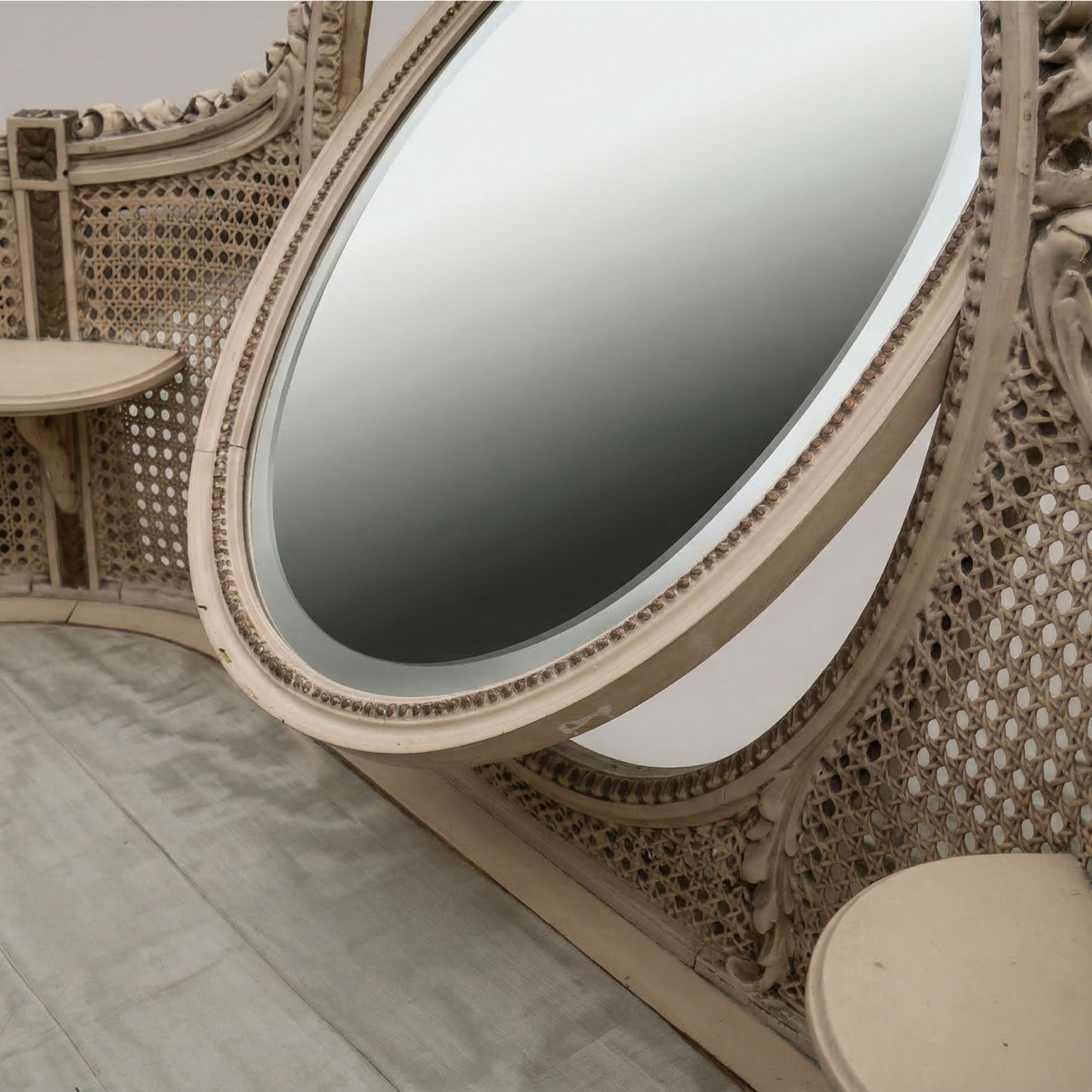
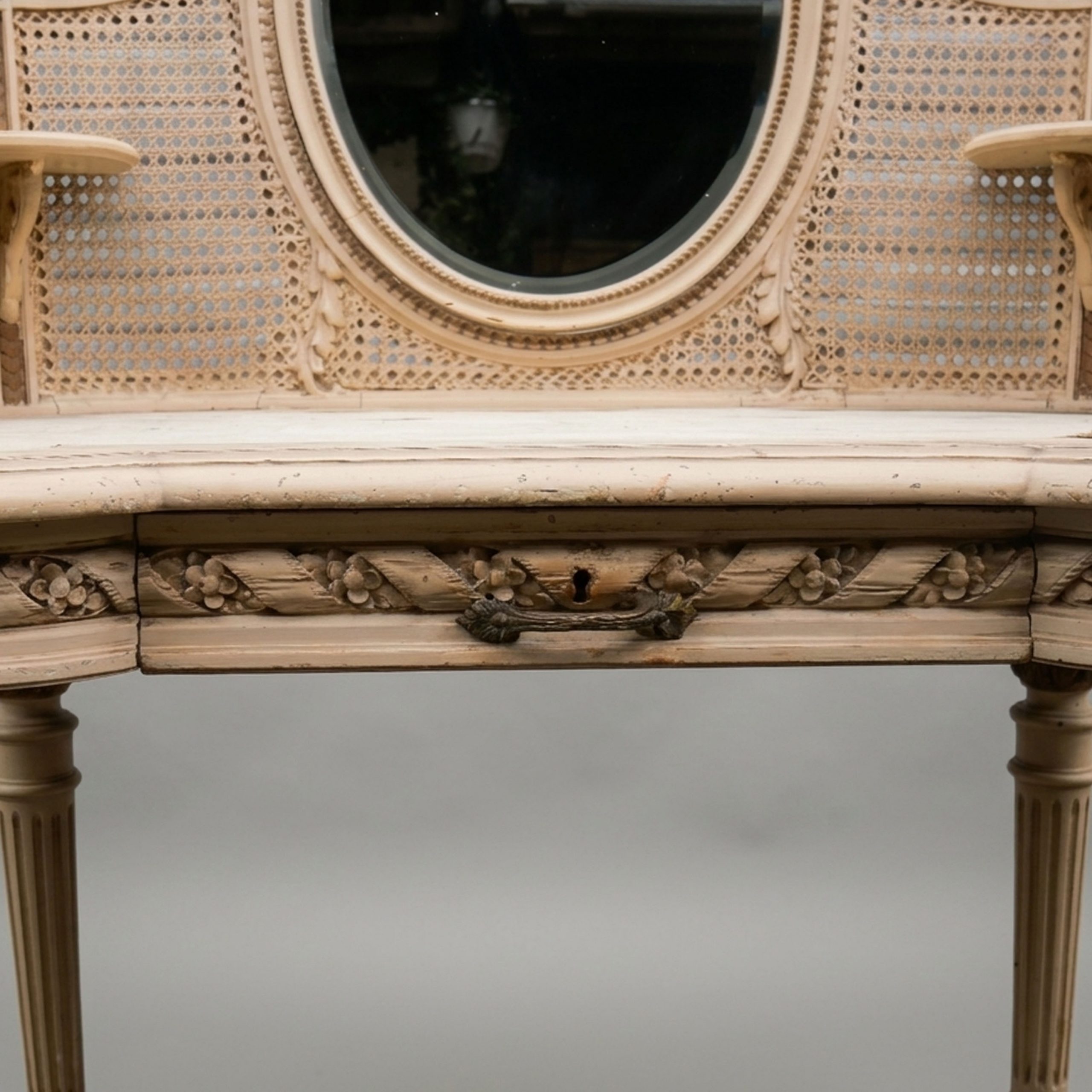
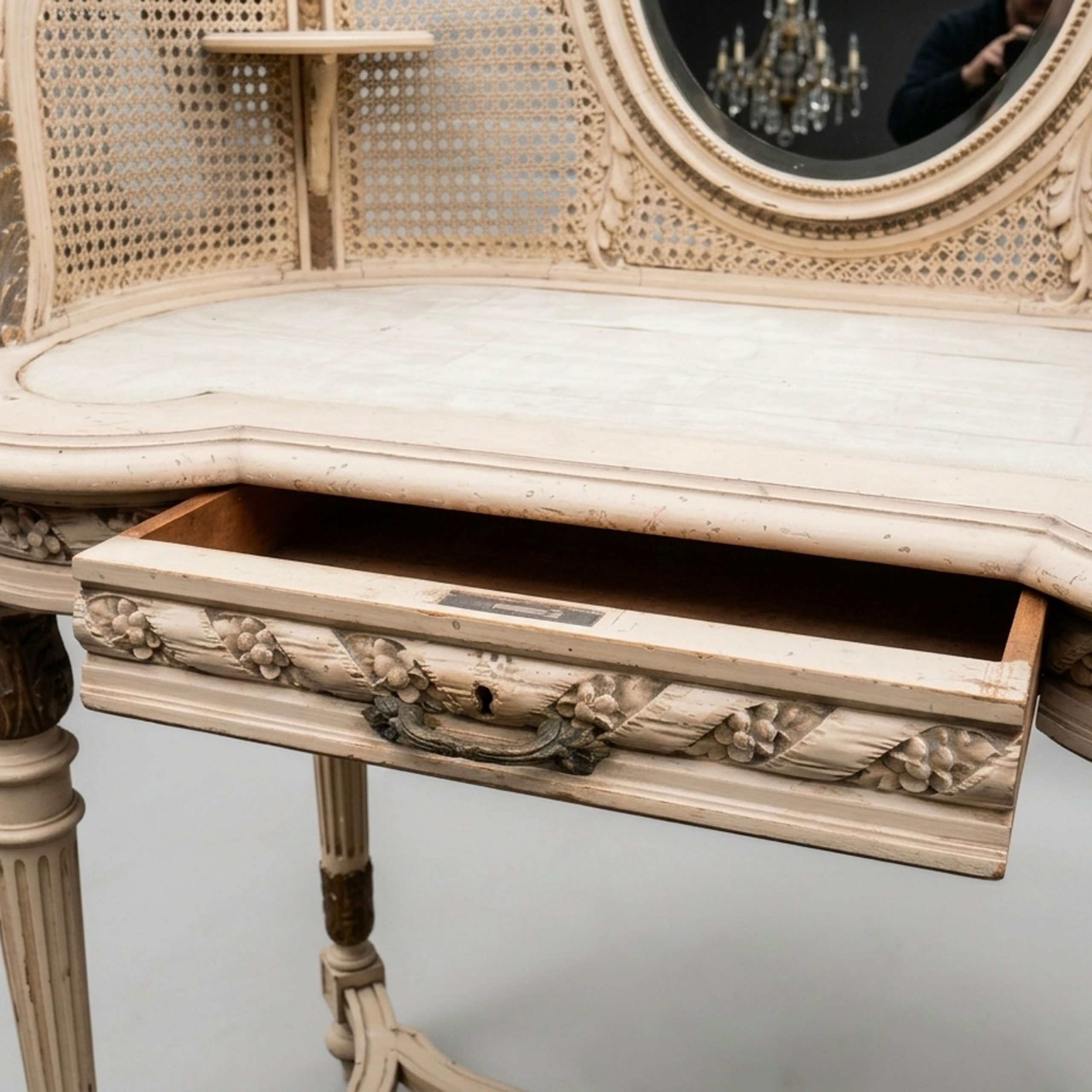
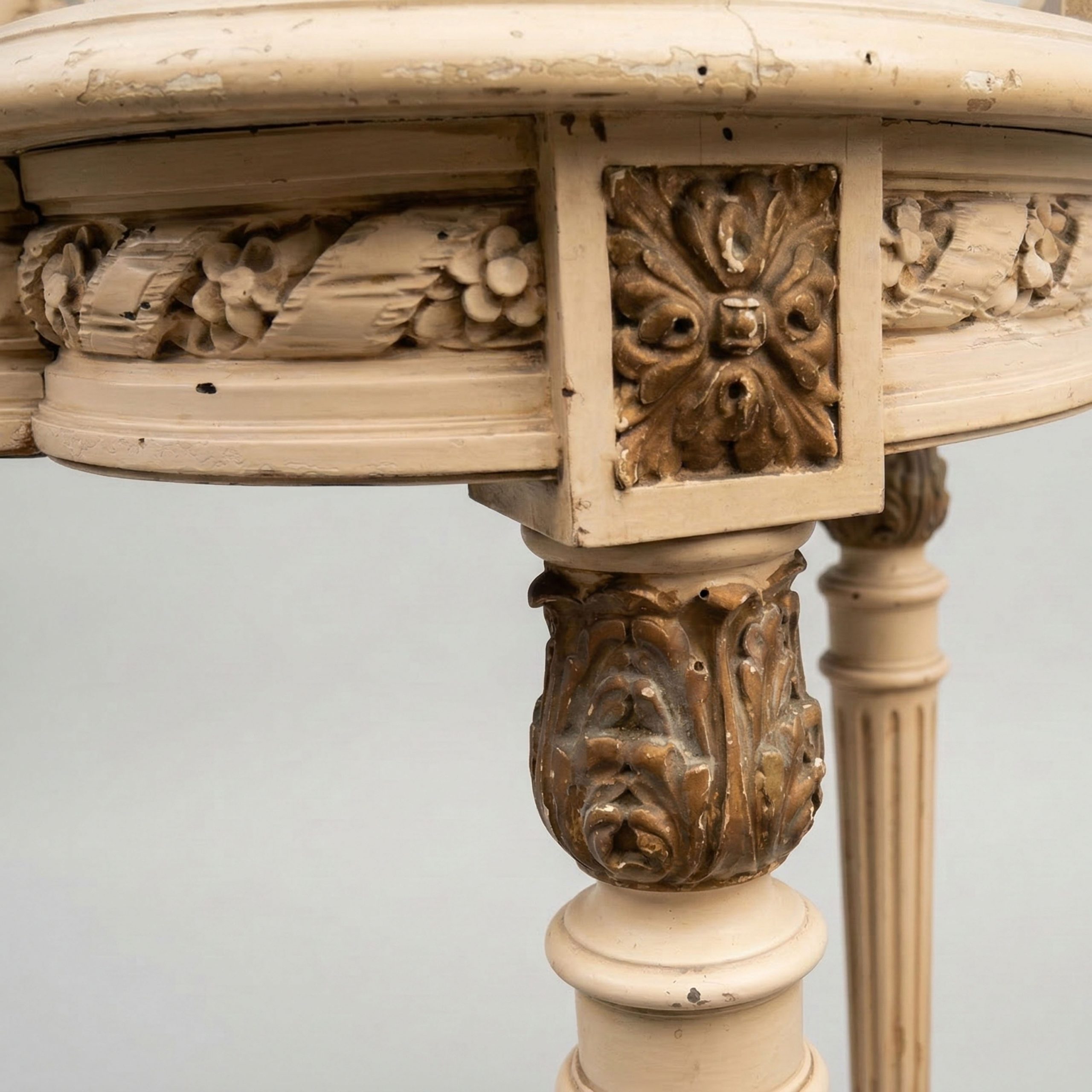
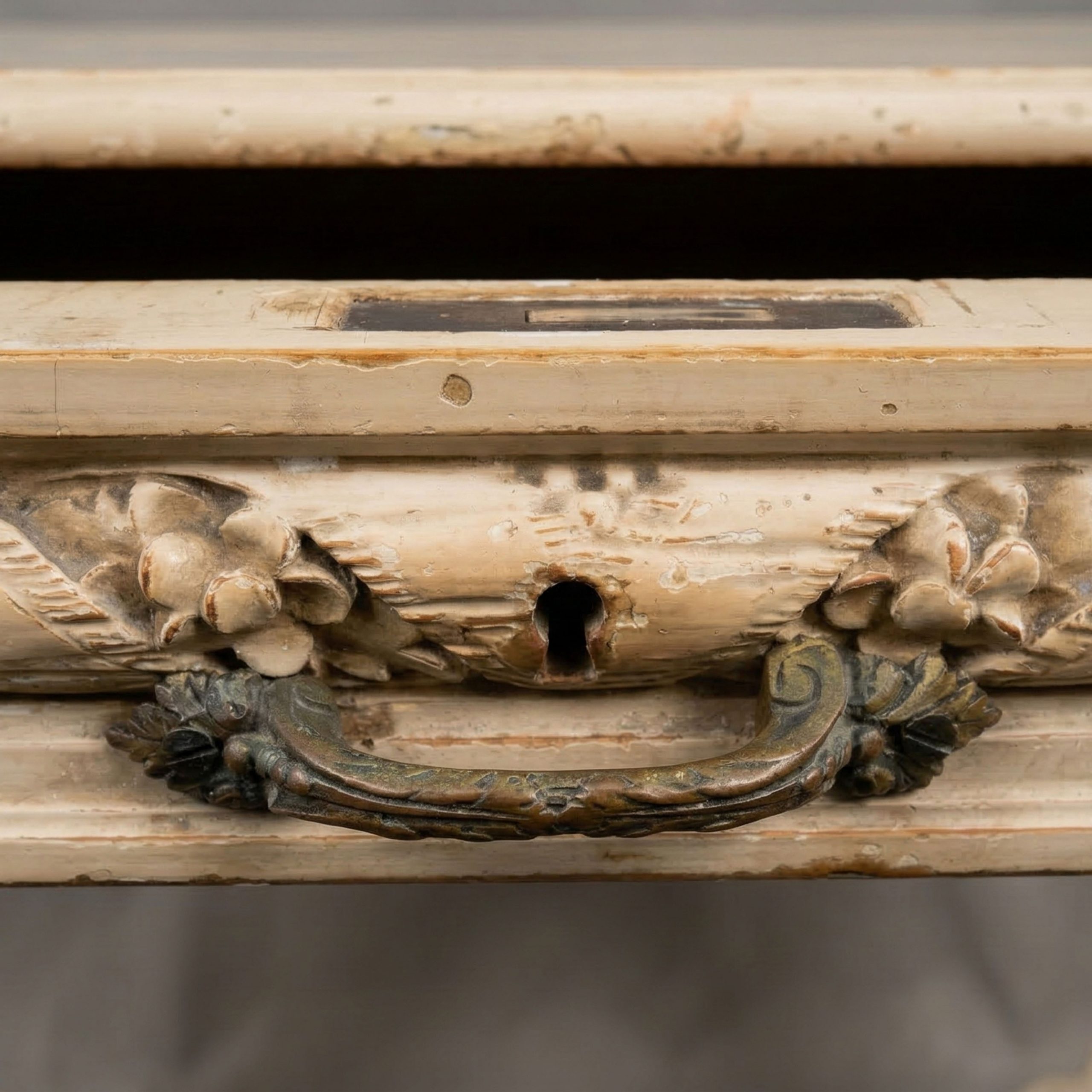
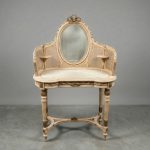
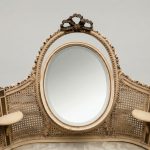
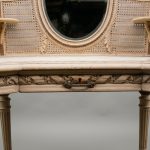
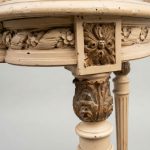
A treasure of delicacy, this cream-lacquered and gold-accented dressing table is a celebration of femininity and the French art de vivre. While its style is directly inspired by late 18th-century Neoclassicism, it was crafted during the second half of the 19th century, under the Second Empire (Napoleon III period). During this era, Parisian master cabinetmakers displayed immense virtuosity in reinterpreting the lightness and grace of Louis XVI lines with unprecedented precision.
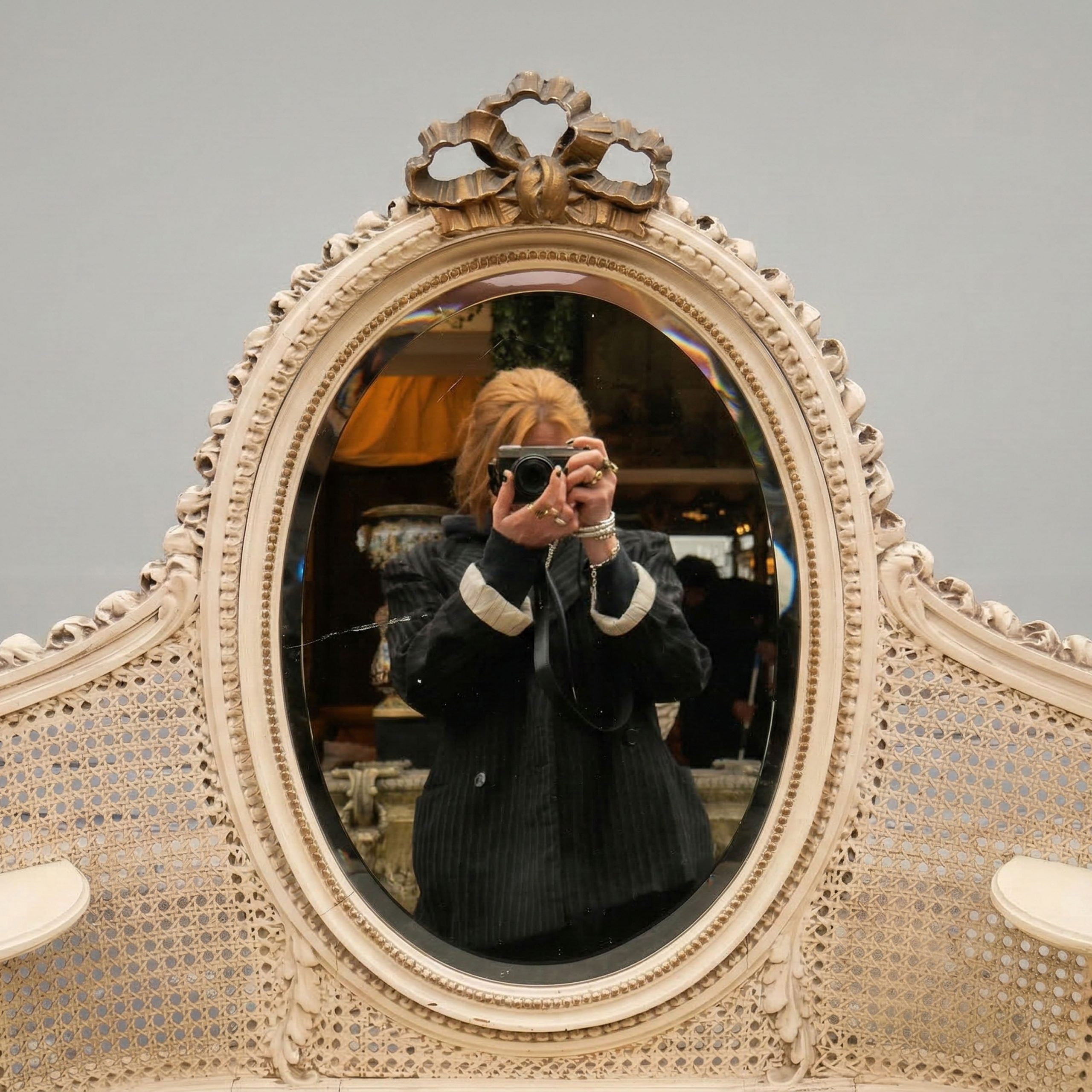
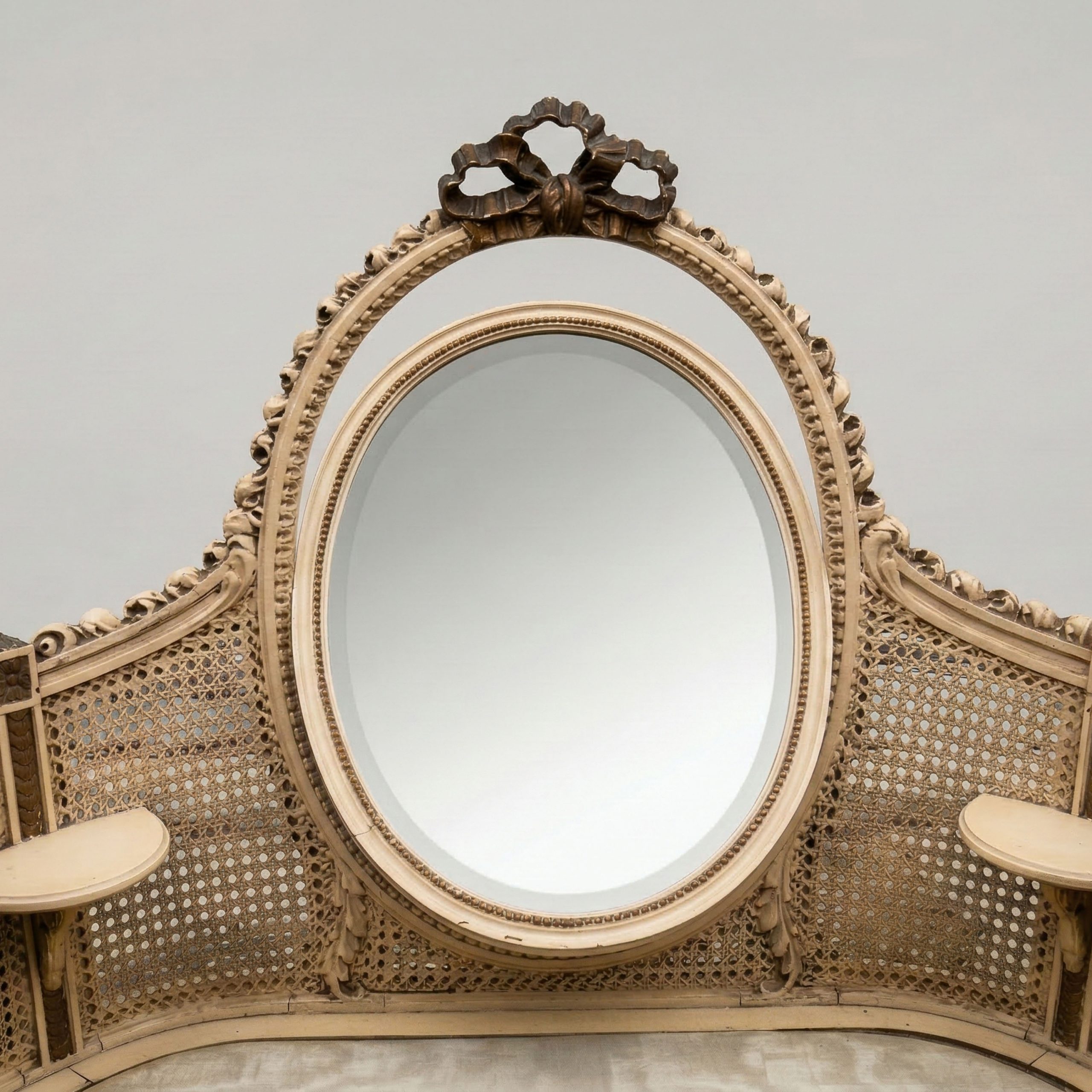
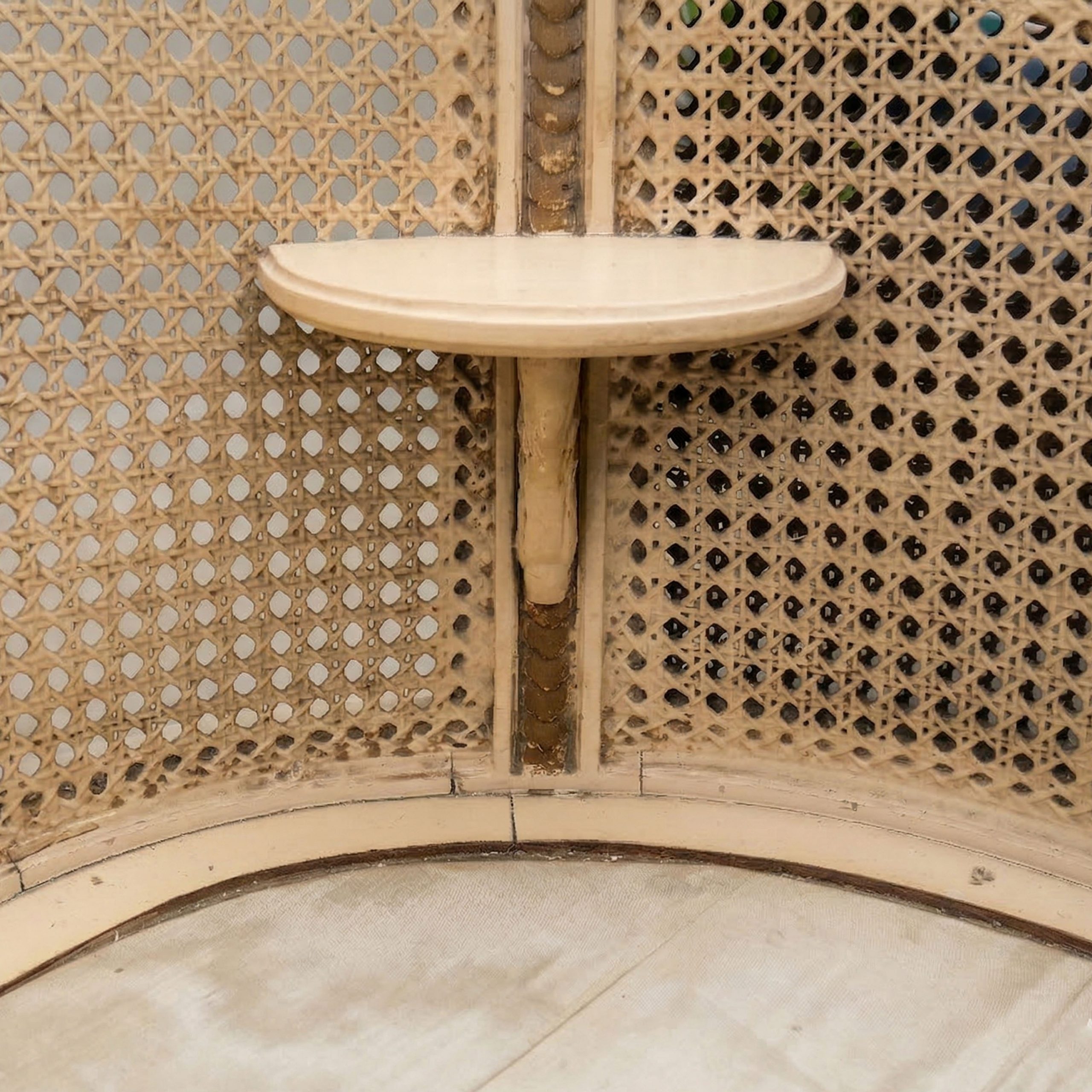
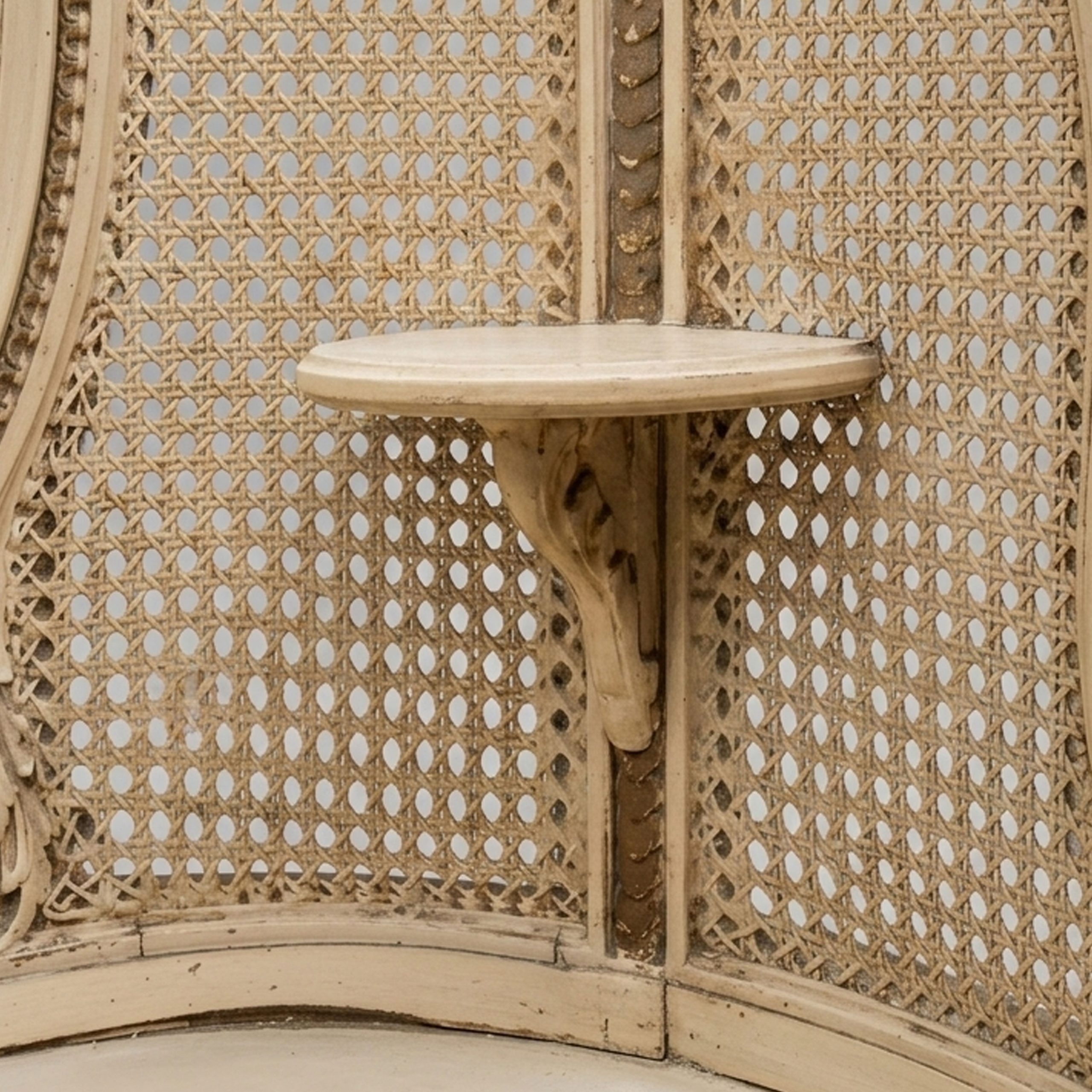
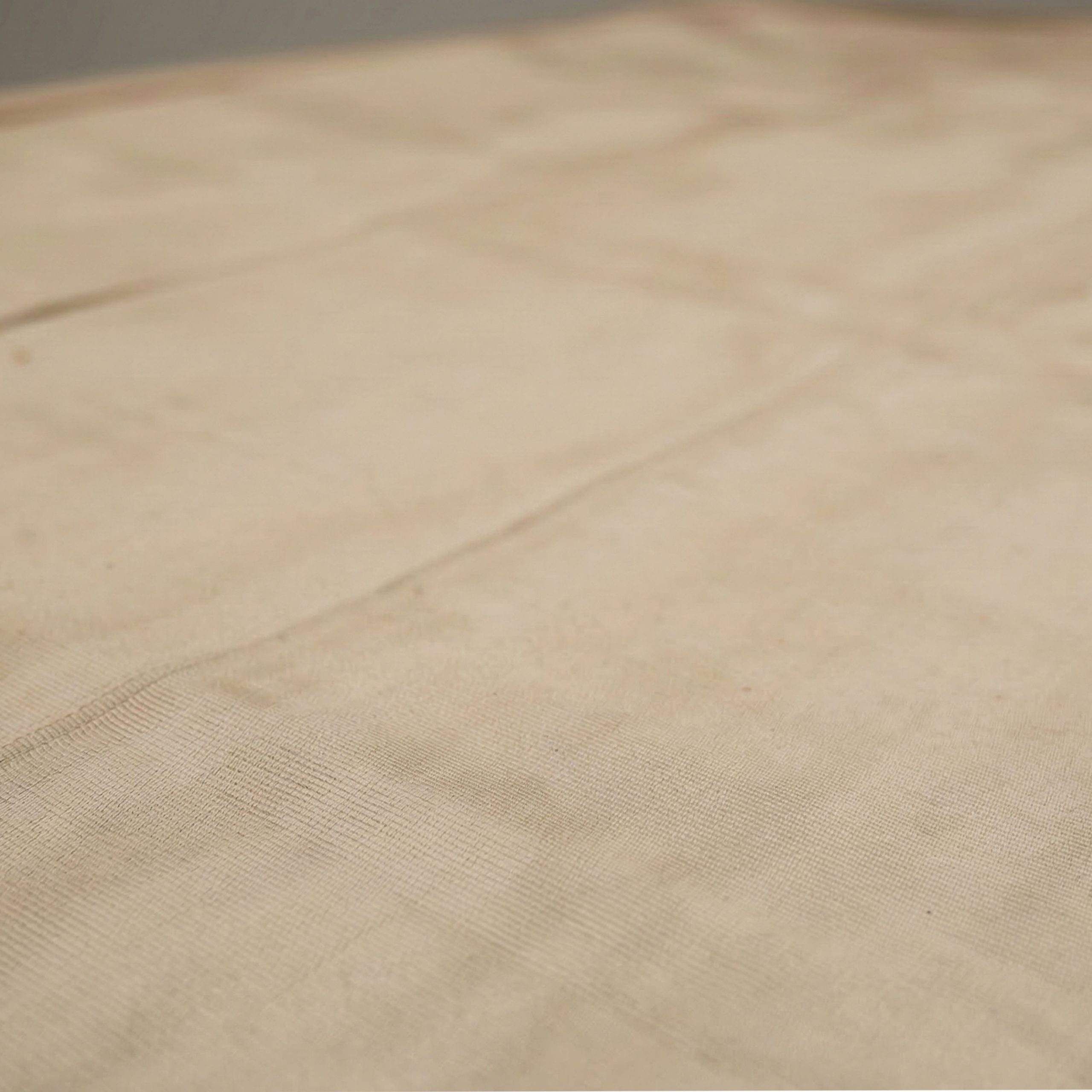
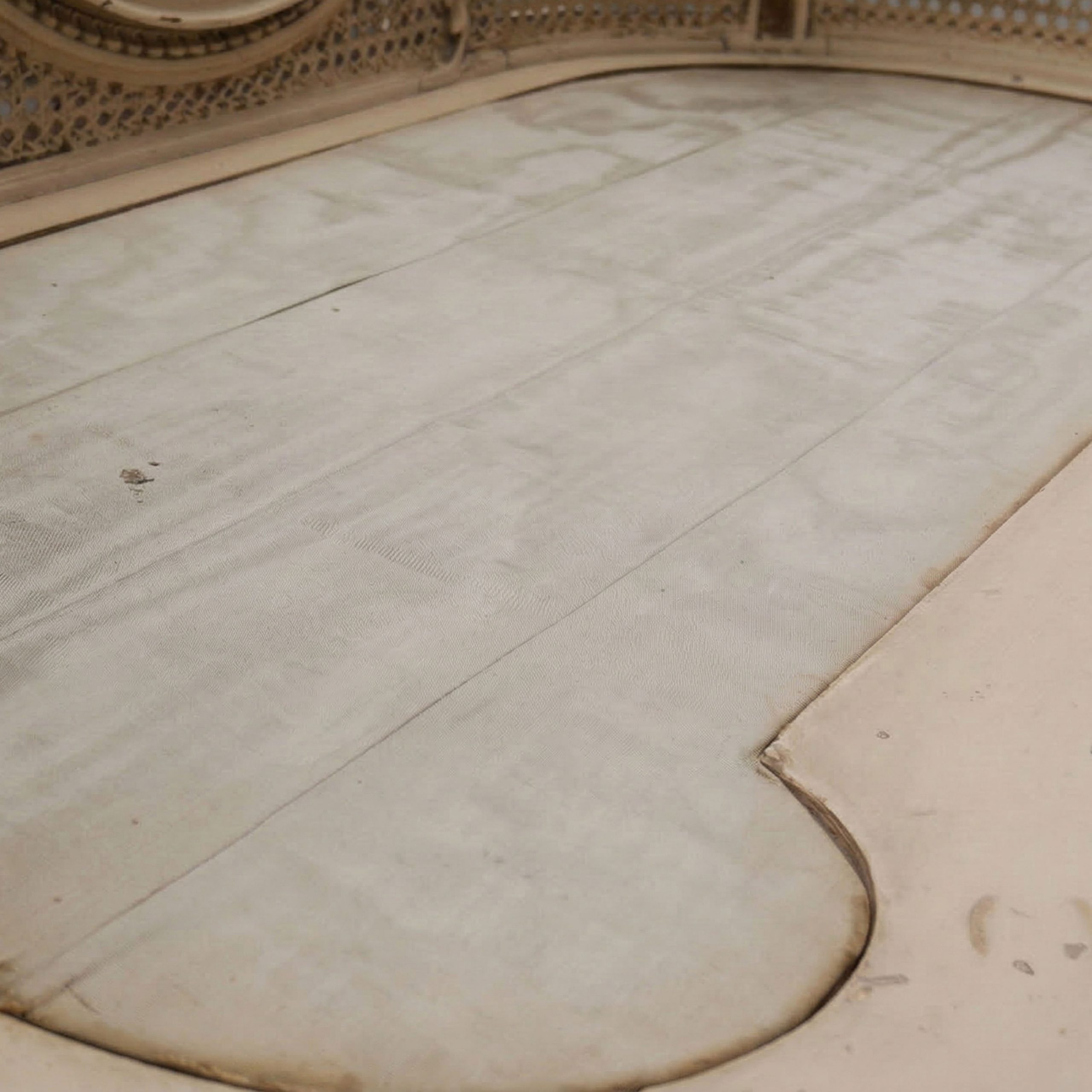
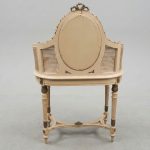
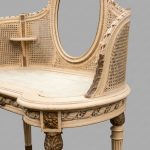
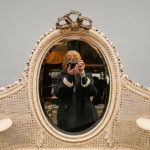
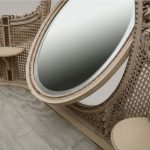
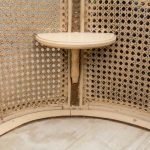
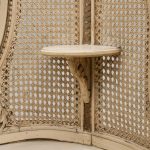
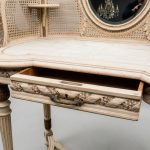
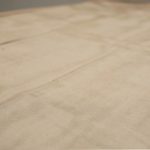
The structure is designed around a tabletop upholstered in its original fabric, whose texture adds an immediate softness to the piece. This fabric has survived in remarkable condition, despite a few light spots—marks of time that only serve to underscore its authenticity. The upper tier features fine cane-work, creating a play of transparency that lends an airy feel to the furniture’s silhouette. At its center sits a beveled mercury mirror, mounted on a pivot and fully tilting to suit one’s needs. The glass shows light foxing—that nostalgic veil characteristic of antique mercury mirrors—confirming its age without hindering its use.
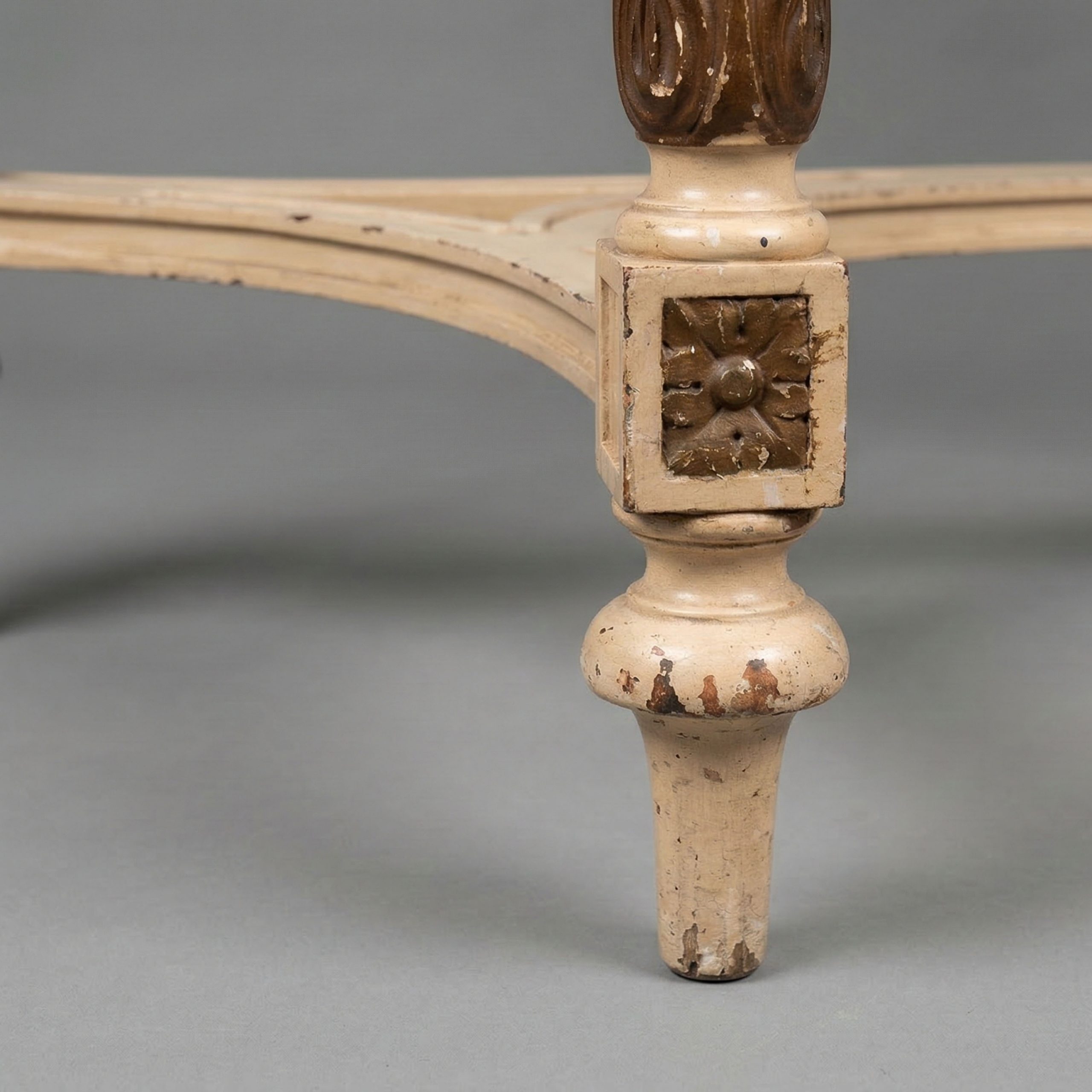
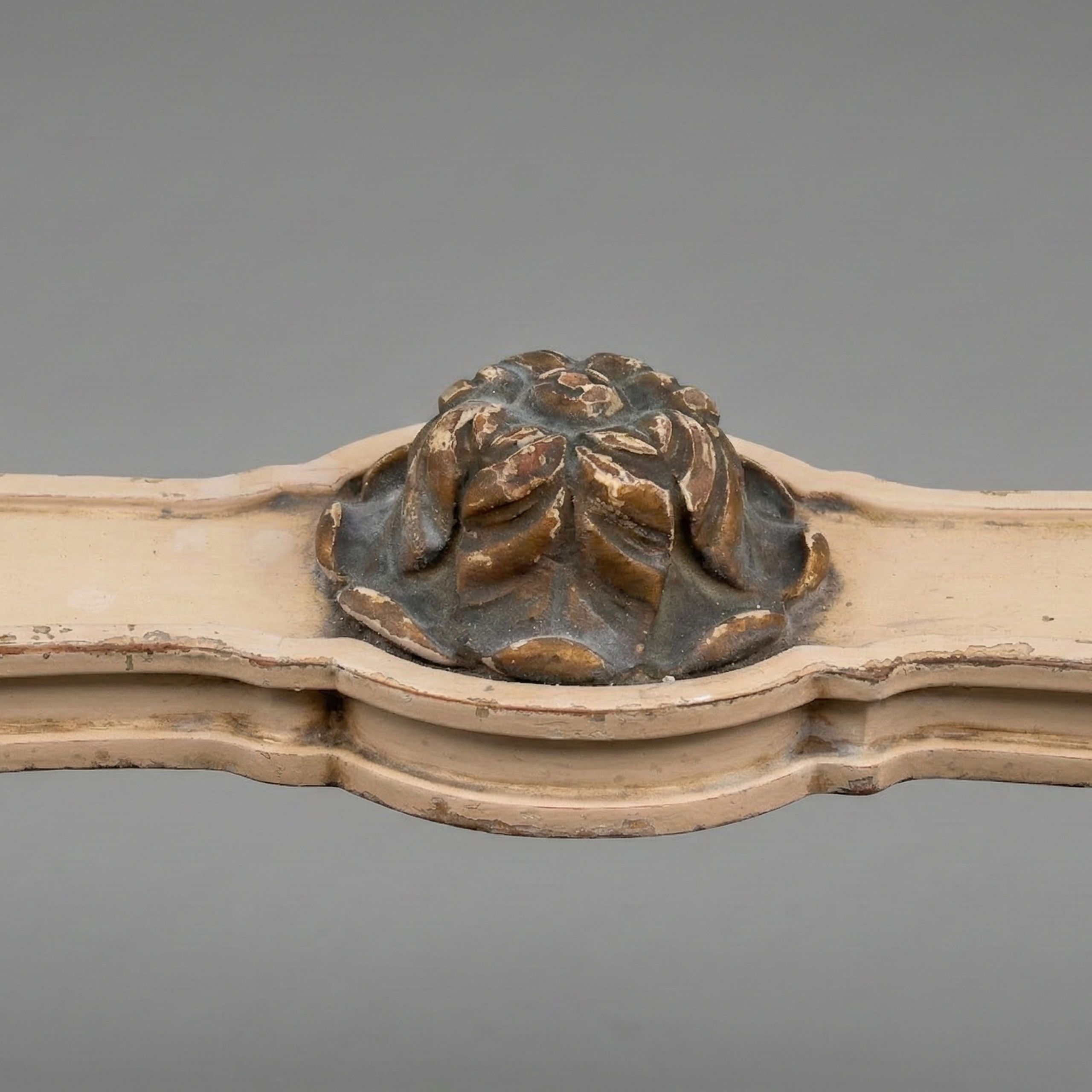
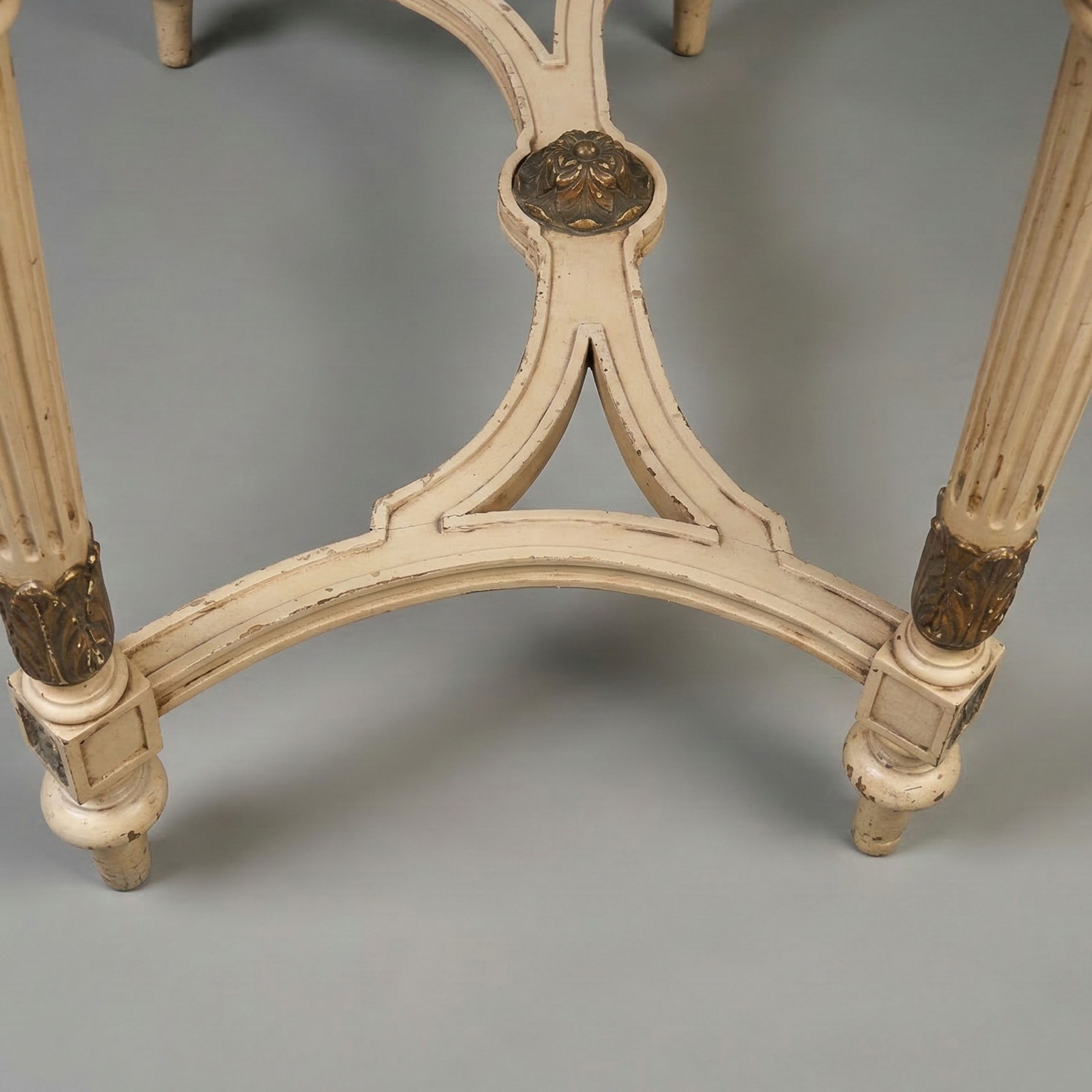
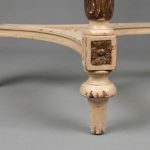
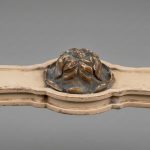
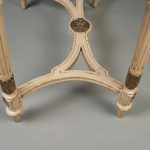
The ensemble rests on four tapered, fluted legs joined by a gracefully curved X-shaped stretcher. This piece has been preserved in its purest “as-found” condition: the original lacquer displays scattered chips and a natural patina, free from any modern retouching. These minor signs of wear are not flaws but rather the signature of time on a piece of furniture that has never been denatured. More than a simple vanity, this coiffeuse is a witness to Parisian elegance, perfect for bringing a touch of authentic poetry to a refined boudoir or bedroom.
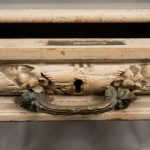
The key is missing, though this does not affect the ease of opening.